The importance of listening skills for students and how to improve them
Many students think good grades come from reading and revising. In reality, a large part of learning happens through listening in class, in groups, and in everyday conversations. This guide explains the importance of listening skills for students, how active listening works, and how to improve step by step.

What are listening skills?
Listening skills are the ability to receive, understand, and respond to what other people say. They are different from hearing, which is simply noticing sound. Listening needs attention, focus, and effort. Students use these skills in lectures, discussions, group projects, and conversations with friends and teachers. Strong listening makes every other skill easier to learn.
Hearing, listening, and active listening
It helps to see listening as a ladder. At the bottom is hearing, where sound reaches your ears but your mind may be elsewhere. The next step is listening, where you pay attention to the message. At the top is active listening, where you also show interest, ask questions, and respond. The diagram shows the three levels. Most students can move up one step with simple habits.
Three levels of listening. Source: NITO Edu
The importance of listening skills for students
The importance of listening skills for students shows up in daily school life. Students who listen well understand lessons faster and remember more. They follow instructions correctly, which reduces mistakes in homework and exams. They also build better relationships, because friends and teachers feel respected. Good listeners are often more confident and calmer, since they know what is expected.
We have two ears and one mouth so that we can listen twice as much as we speak.Epictetus Greek Stoic philosopher
Listening also supports other skills. It improves vocabulary and grammar, because students hear how words are used. It strengthens speaking, since you learn how others explain ideas. It helps in group projects, where everyone's ideas count. It also prepares students for interviews and the workplace, where listening is a key skill. Starting early builds a habit that lasts for life.
Active listening skills for students: what it looks like
Active listening skills for students are the habits that show you are fully engaged. You look at the speaker, keep your body still, and focus on the message. You take short notes, ask questions, and respond. The illustration compares a distracted listener with an active listener in the same class. Notice how small changes in posture and attention make a big difference.
The same lesson, two different listeners. Source: NITO Edu
6 active listening habits to start this week
Here are six habits you can start using in your next class. Each one is simple and needs no special tools. Try one or two at a time, and add more as they become natural. Check how much more you remember after a week. Small changes in attention add up to big gains in learning.
Your active listening checklist
Six habits for every classroom
Brought to you by NITO Edu
How to improve listening skills for students: 7 tips
1. Prepare before class
Skim the topic before the lesson so new words sound familiar. Bring a notebook and pen, and keep your phone away. Sit where you can see and hear the teacher clearly. Get enough sleep, because tired brains struggle to focus. Good preparation makes listening easier.
2. Remove distractions
Put your phone on silent and out of sight. Close extra tabs during online classes. Avoid side conversations while someone is speaking. If something distracts you, gently bring your attention back. Even short breaks in attention can cause you to miss key points.
3. Look at the speaker
Eye contact helps your brain stay engaged. It also shows respect and encourages the speaker. Face the teacher or classmate, and keep an open posture. Nod or smile when you agree or understand. These signals help you focus and help others feel heard.
4. Take short notes
Write keywords and ideas, not full sentences. Use simple symbols and headings to organise your notes. Noting questions as they come keeps you from interrupting. Review your notes the same day to remember more. Note-taking keeps your mind active while you listen.
When you talk, you are only repeating what you already know. But if you listen, you may learn something new.Dalai Lama Spiritual leader
5. Ask questions and paraphrase
Ask a question when something is unclear, and wait for the answer. Repeat the idea in your own words, such as "So you are saying that..." This checks your understanding and shows interest. It also helps you remember. Teachers and classmates appreciate students who clarify politely.
6. Do not interrupt
Let the speaker finish before you reply. Wait one second after they stop, to be sure they are done. Hold your thoughts in your notes, so you do not forget them. Interrupting breaks the flow and can make people feel unheard. Patience makes discussions deeper and calmer.
7. Practise daily
Listening improves with practice. Listen to a short podcast or talk, and summarise it in three sentences. In conversations, try to remember one detail the other person shares. Join debates, clubs, or group study sessions to practise in real settings. Ask a friend or teacher for feedback on how well you listen.
Active listening phrases students can use
Here are three situations with phrases that show active listening. Each card shows a weaker reply and a stronger one. The scenes are illustrations, not real cases. Notice that the strong replies are short and polite. They keep the conversation going and help you learn. You can use them in class and in group work.
Example 1: Clarifying in class
Imagine a student who does not understand a step in a maths problem. Staying silent means the confusion continues. A polite question clears it up and helps the whole class. Teachers value this kind of engagement. Asking early saves time and builds confidence.
Example 2: Checking understanding in a group
Picture a group project where a teammate shares a plan. A careless reply makes the teammate feel ignored. Repeating the plan in your own words confirms that you understood. It also gives the teammate a chance to correct any gaps. This builds trust and avoids mistakes later.
Example 3: Showing interest to a friend
Consider a friend who is stressed about an exam. Looking at your phone tells them you do not care. Turning to them and asking a gentle question shows empathy. Listening in this way strengthens friendships. It is also an important life skill.
Habits that block good listening
Some habits block good listening. Multitasking during class splits your attention. Daydreaming about your own reply while someone speaks means you miss their point. Interrupting to share your own story breaks the flow. Pretending to understand leaves gaps that grow into confusion. Noticing these habits in yourself is the first step to fixing them.
Build listening skills with guided practice
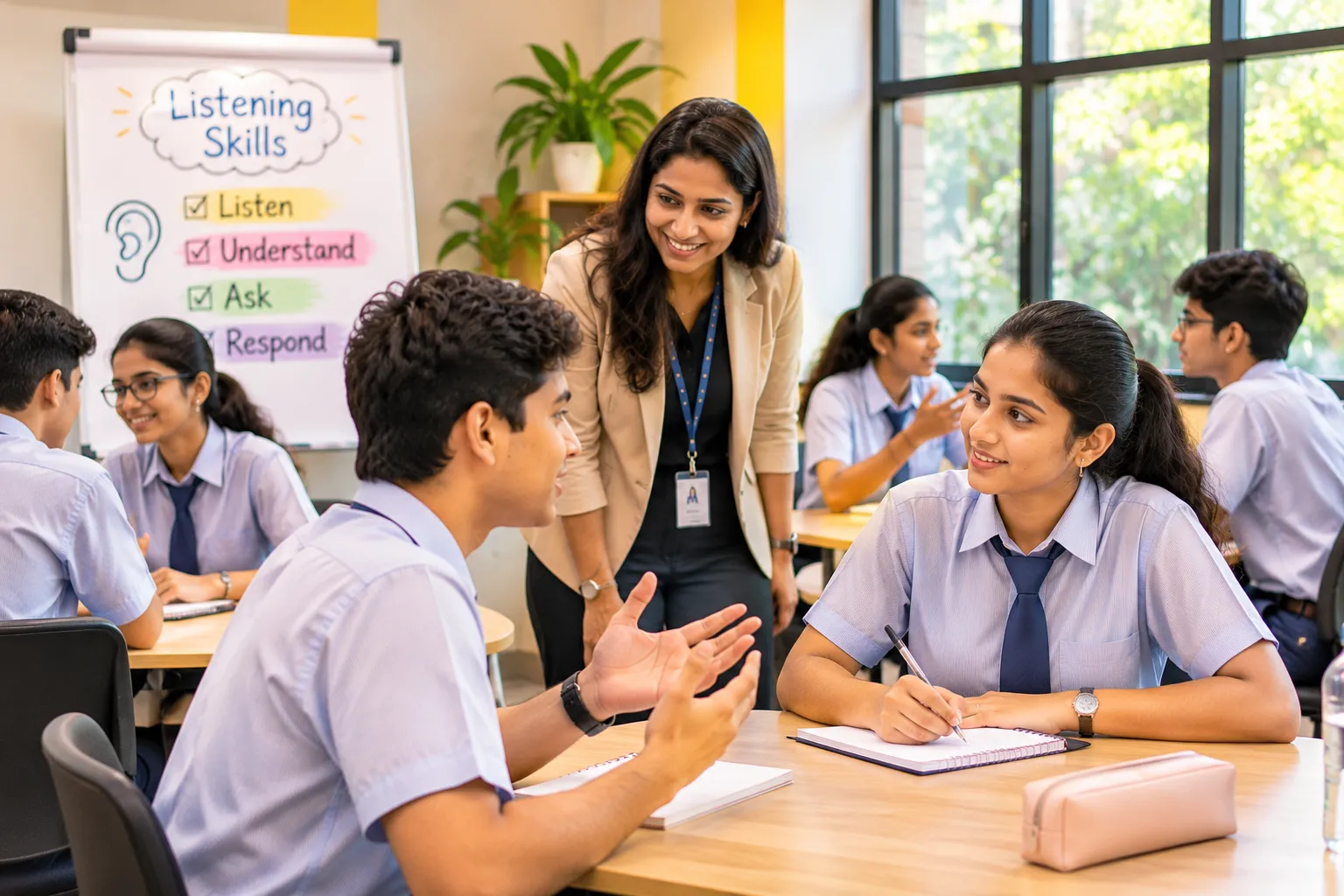
Listening grows fastest with guidance and practice. A trainer can set up fun exercises, role plays, and feedback that school students can use right away. If you want a structured path, explore Communication Skills for School Students at NITO Edu. It is designed to help students listen, speak, and express themselves with confidence. These skills support learning in every subject.
Final thoughts
The importance of listening skills for students is easy to miss, because good listening looks quiet. Yet it shapes how much you learn, how well you work with others, and how people see you. You do not need special talent to improve. Pick one habit from the checklist and use it in your next class. Over time, active listening will become a natural part of how you learn.
Ready to help your child listen, speak, and shine?
Learn live, in small batches, with an expert trainer in front of you.
Explore the school course Talk to an expert